


How Long Do Rooftop HVAC Units Last on the Florida Coast?
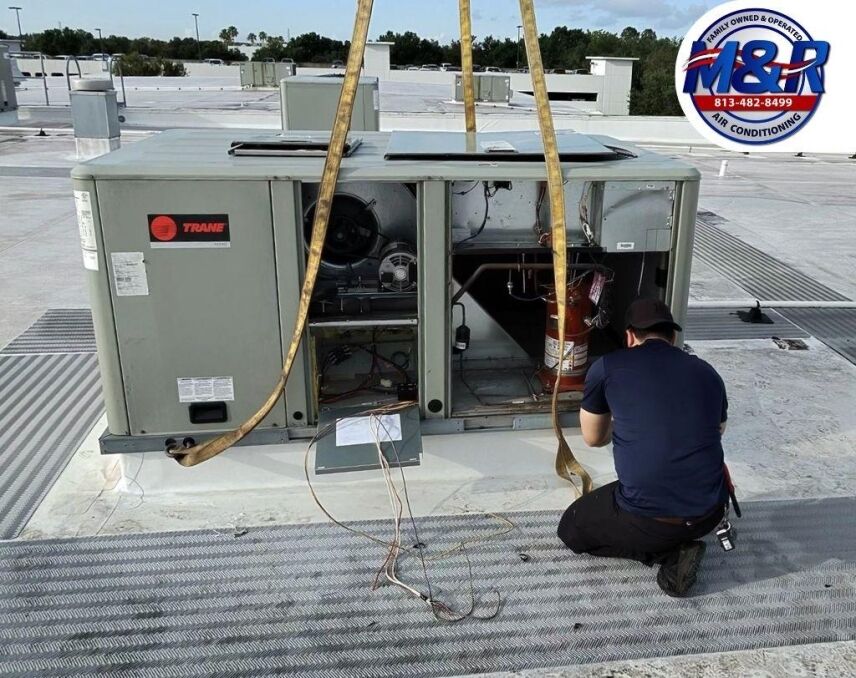
With proper care, most rooftop air conditioning units last 15 to 20 years. On the Florida coast, we typically see rooftop units last about 7 to 12 years because salt air, strong sun, and year-round cooling add wear.
If you own or manage a commercial building, or you have a home or condo with a rooftop unit, knowing that number helps you budget for a replacement and plan ahead, so everyone inside stays comfortable all summer long.
At M&R Air Conditioning, our family services rooftop units across Pinellas County, so we’ve seen firsthand what helps these systems go the distance.
What’s the Average Lifespan of a Rooftop HVAC System?
The average lifespan of a rooftop HVAC system depends mostly on the system type sitting on your roof. Here are the typical ranges for the most common rooftop systems, along with what we see on coastal properties in Pinellas County.
Rooftop Unit Type | Typical Lifespan | Coastal Pinellas County |
|---|---|---|
Packaged air conditioner (straight cool) | 15 to 20 years | 7 to 12 years |
Packaged heat pump | 15 to 18 years | 7 to 12 years |
Gas/electric package unit | 15 to 20 years | 7 to 12 years |
Many property owners plan to replace an AC unit somewhere between 12 and 17 years, which gives them time to set money aside well ahead of the end of its useful life. Systems in hot climates tend to land toward the shorter end, since the long cooling season puts extra hours on the compressor and fan motors.
Expected Lifespan on the Coast and Inland
The closer your building is to the water, the sooner its rooftop unit tends to wear out. In our experience, corrosion hits hardest within about 1 to 2 miles of the Gulf or Tampa Bay, while units a few miles inland often last 12 to 20 years.

What Factors Affect a Rooftop Unit’s Lifespan?
Living on the coast means your rooftop unit faces a few extra challenges, starting with environmental factors like salt air and strong winds.
Those challenges, along with heat and humidity, heavy cooling loads, and installation quality, make up the five factors that shape how many good years you’ll get from your unit. Once you understand how each one works, you can plan around all of them.
Salt Air
Salt air is one of the biggest factors for rooftop units near the water. Gulf breezes carry tiny salt particles inland, and those particles build up on the condenser coils, cabinet, and wiring.
Over time, the salt corrodes the thin metal fins on the coils, which makes it harder for the unit to release heat. As that corrosion spreads, the system runs longer to cool the building, and the extra runtime adds even more wear and tear.
Coastal beaches see the most salt damage because the sea breeze off the Gulf pushes salty air east onto the coastline. Tampa Bay is less salty than the Gulf, since rivers and streams feed fresh water into it.
Salt also reaches the indoor coil, as opening and closing doors lets outside air circulate through the system, so indoor coils on coastal buildings tend to rust faster too.
Heat and Humidity
Rooftop units sit in full sun all day, so they work in some of the hottest conditions on the property. Florida’s high humidity adds to that load, since your system is constantly pulling moisture out of the air.
That moisture drains into a pan on the roof, and a pan that stays wet or clogged can lead to rust and water problems over time. With all that heat and moisture to handle, the compressor runs longer each day, and those extra hours add up to more wear every year.

Wind and Hurricanes
Rooftop units sit up high, so they catch the full force of summer storms and hurricane season winds. Those gusts put stress on the tie-downs that hold the unit in place and on the roof curb it sits on. Flying debris can also bend coil fins or dent the cabinet panels.
During service visits, our team checks that the tie-downs are tight and free of rust and that the roof curb is sealed. After a storm or hurricane, we can also inspect your unit within 1 to 2 days.
Heavy Cooling Loads
A building’s usage patterns also shape how long its rooftop unit lasts. Restaurants and retail stores, for example, put a heavy cooling load on their units, since doors open all day and kitchens and crowds add extra heat.
In those spaces, the unit runs longer and cycles more often, which puts unnecessary strain on the compressor, fan motors, and other HVAC components. If your building stays busy, a maintenance schedule that keeps pace with that workload helps your unit go the distance.
Installation Quality
How a unit is installed affects how long it lasts. A rooftop unit that’s sized correctly for the building runs in steady cycles. By comparison, an oversized unit turns on and off too often, which is called short-cycling, and that constant starting and stopping wears parts out faster.
That’s why a quality installation that meets industry standards gives your unit the best start. When our team installs a rooftop unit, we run a load calculation to size the unit, check the roof curb fit, and secure the hurricane tie-downs.
Proper Maintenance for Your Rooftop AC Unit or Heat Pump
Salt and grime build up quickly on coastal rooftop units, which is why our commercial maintenance agreements include a preventative maintenance visit every three months.
Each visit covers rinsing salt off the coils, checking refrigerant levels, tightening electrical connections, clearing the drain pan, and changing filters.
For homeowners, annual tune-ups for $125 keep the system running smoothly through the hottest months.
Changing Filters Regularly
Changing filters regularly is one of the simplest things you can do between visits. A clogged filter chokes off airflow and forces the blower and compressor to strain. Florida’s long cooling season clogs air filters fast, especially in busy commercial spaces.
For restaurants, we recommend a filter change every 2 to 3 months, depending on the type of food and how well the hood exhaust and return grilles are set up. Offices and retail spaces usually need a change every 3 months, while homes and condos need one every 1 to 3 months, depending on pets.
Coil Cleaning and Coatings
Salt builds up fastest on the coils of units near the water. A regular rinse washes away salt, dirt, and debris so the unit can shed heat efficiently, and a protective coating adds a second layer of defense against corrosion.
Our team gives coastal coils a full cleaning twice a year, or more often if you’d like. For the best protection, we recommend ordering a factory coating or a coastal model when you install a new system. A coating can also be applied in the field later, but it works best on a new unit.
Ductwork and Air Quality
Your ducts affect both how long the unit lasts and the air inside your building. Leaks and buildup make the unit push harder to deliver cool air, so sealing and cleaning the ducts on a schedule takes that strain off.
Setting your thermostat fan to “auto” helps too, since it cuts down on runtime and reduces wear on the blower motor. And if air quality is a concern in your home, our team can install UV lights, in-duct air purifiers, or a whole-home dehumidifier.
Signs Your Rooftop Air Conditioning Unit Needs Replacing
Every rooftop unit eventually reaches the end of its lifespan, even with great care. Fortunately, most units give you a few warning signs along the way, which leaves you time to plan.
- Frequent repairs: If you’re calling for repairs several times a season, that repair history suggests your unit is nearing the end of its life.
- Uneven temperatures: When your system struggles to maintain temperature in certain rooms, that can point to declining efficiency or a mechanical issue.

- Rising energy bills: When your energy bills climb without any change in how you use the building, the unit is likely losing efficiency.
- Age: ENERGY STAR suggests considering a replacement once an air conditioner passes 10 years old, especially when other signs show up too.
- Repair costs: As a general guideline, consider replacement when a repair costs more than half the price of a new unit. Our team follows this same guideline when recommending a repair or a replacement.
An older system also costs more to run, so a new system with better energy efficiency can lower your operating costs.
If you’re seeing any of these signs, give us a call. We’ll take a look at your unit and let you know honestly whether a repair or a replacement is the better choice.
Frequently Asked Questions
What Does Replacing a Rooftop Unit Involve?
Replacing a rooftop unit takes a bit more planning than replacing a ground-level central air system, since the job usually involves a crane to lift the old unit off the roof and set the new one in place, along with a curb adapter if the new unit has a different footprint.
Most rooftop replacements take about one day. Our team pulls the permit, can schedule the work after hours to limit disruption, and installs new units that use R-454B or R-32 refrigerant, depending on the manufacturer.
How Many Years Can Regular Maintenance Add to the Average HVAC Lifespan?
There’s no set number of years, since the answer depends on whether the system serves a home or a business. On the coast, regular cleaning and rinsing slow down the corrosion that shortens a unit’s life. Routine maintenance catches small problems early and helps prevent frequent breakdowns, which can extend the life of your unit.
Extend Your Rooftop Unit’s Average Life Expectancy With M&R Air Conditioning
Whether your rooftop unit needs maintenance services or you’re starting to plan for a new system, our family-owned team is happy to help.
We service rooftop units for businesses and homeowners across Pinellas County, Hillsborough County, and the surrounding areas, and we’ll always give you honest, expert advice about what your system needs. Call us at 813-482-8499 or reach out online to schedule a visit.

Latest Articles

Heat Pump Not Cooling in Florida? What It Means and When to Call for Repair
AC Unit Maintenance Cost in Pinellas County: What You Pay and What It Covers