


Thermostat Set to Cool But AC Not Turning On? Here’s How to Fix It
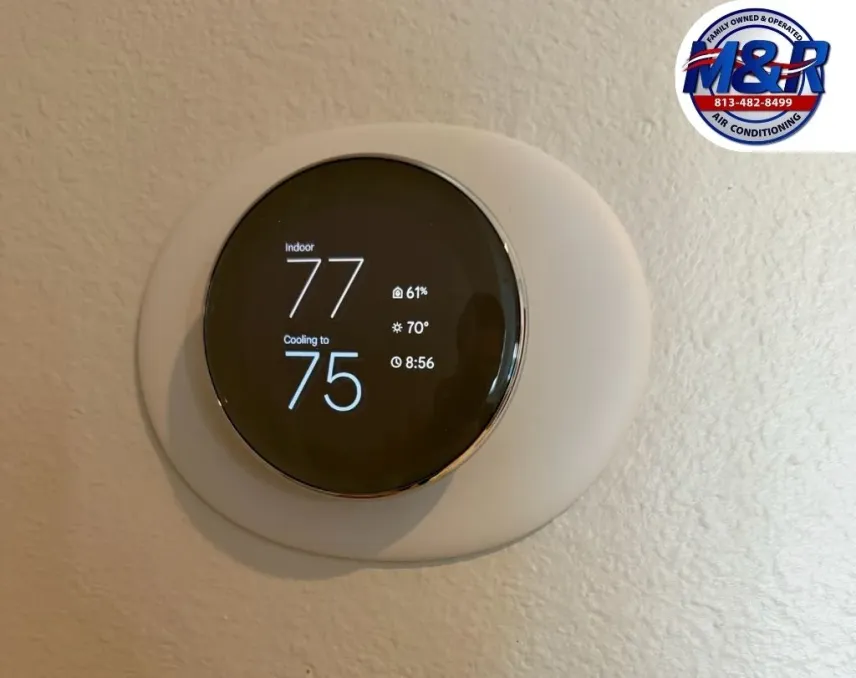
Your thermostat displaying “Cool” tells you what the thermostat is asking for. Whether the rest of your system received that request is a separate question. Between that digital display and cold air flowing from your vents, five steps must occur in order: the thermostat calls for cooling, the indoor air handler receives the signal, the blower fan moves air, the outdoor unit receives power, and the compressor generates cooling. Identifying where that sequence breaks down narrows the cause far faster than working through a random list of possibilities.
I’m Mitch Orta of M&R Air Conditioning. My sons and I handle service calls personally across St. Petersburg and Pinellas County. In our coastal Florida climate, system failures follow very different patterns than they do in northern states.
Identify Where the Cooling Sequence Stops
Set your thermostat setpoint several degrees below the current room temperature, then stand near the system and listen closely for one minute. What you hear, or don’t hear, indicates which part of the system needs attention:
- Complete silence. No blower, no outdoor unit, no airflow. The issue stems from the indoor controls or the main electrical supply, so start with the thermostat, circuit breakers, and safety float switches.
- Indoor blower runs, outdoor unit is silent. The cooling signal reached the indoor air handler and stopped short of energizing the condenser. Focus on the outdoor breaker, disconnect box, contactor, and start capacitor.
- Both units run, and the air is warm. The system is receiving power and responding, so this is no longer a startup failure. The issue points to restricted airflow, a frozen evaporator coil, or a refrigerant leak.
Sorting your symptoms into one of these three categories immediately eliminates the majority of potential causes.

Wait Five Minutes First
Most modern HVAC systems feature an internal compressor delay timer that holds off startup for three to five minutes following a shutdown, power fluctuation, or thermostat adjustment. Some digital displays show “Wait,” “Delay,” or a flashing snowflake icon while counting down.
This safety mechanism protects the compressor from damaging short-cycling. Adjusting the thermostat repeatedly resets the timer and delays startup further. The fastest approach is to set the temperature once and watch the system for five minutes.
Check Thermostat Settings and Power
A thermostat can hold enough charge to light its screen and still fall short of the power needed to close its internal relay and send a 24-volt signal to the air handler. Replace thermostat batteries annually, even if the display looks bright and responsive.
Next, verify the basic operational settings:
- Mode: Set to Cool.
- Setpoint: At least 3 to 5 degrees below current room temperature.
- Fan: Set to Auto. Setting the fan to On runs the blower continuously without active cooling, which blows room-temperature air whenever the compressor is off.
- Schedules and programs: Confirm the setpoint on screen is the one the thermostat is acting on, since a schedule, hold, or eco mode can quietly override it.
Check Circuit Breakers, Once Only
Most central air systems run on two dedicated electrical circuits: a 15-to-20-amp double-pole breaker for the indoor air handler, and a 30-to-50-amp double-pole breaker for the outdoor condenser. A tripped breaker often rests in a middle position between On and Off without flipping completely.
Reset a tripped breaker once. Push the switch firmly to Off, then flip it back to On.
Safety warning: If the breaker trips again immediately, leave it off and call a professional. A breaker that repeatedly trips indicates a short circuit, a grounded motor, or a compressor fault. Forcing repeated resets can melt wire insulation and cause severe electrical damage.
Also check the exterior disconnect switch box mounted near the outdoor condenser, and the indoor service switch near the air handler. Both get switched off inadvertently during yard work, filter replacements, or attic storage.
In Pinellas County, Check the Condensate Drain Line Early
In Pinellas County, condensate float switches are a primary cause of system shutdowns.
Operating up to nine months a year, a Florida AC system extracts gallons of humidity from the air daily. That moisture drains through a PVC line that stays damp almost year-round, creating ideal conditions for algae and biological buildup. When the drain line clogs, water backs up into the drain pan, raising a safety float switch that cuts power so water can’t overflow through your ceiling.
When that happens, the system shutting off means the safety feature worked as designed.
Inspect the primary drain pan or the secondary emergency pan beneath your air handler for standing water. If water is present, the switch interrupted power and the drain line needs clearing. Our guide to AC leaks and clogged drain lines covers the step-by-step process.
Never bypass or jumper a safety float switch to restore cooling temporarily. The unit keeps producing water, and the ceiling damage follows.
Inspect the Air Filter
A filter heavy with dust severely restricts airflow across the evaporator coil. Without adequate airflow, the coil temperature drops below freezing, turning ambient condensation into a solid block of ice and triggering low-pressure safety cutoffs.
If you spot frost or ice along the copper refrigerant lines, switch the thermostat mode to Off and the fan to On to circulate warm air across the coil and thaw it. Complete thawing can take several hours. Restarting a system with a frozen coil won’t produce cold air and risks damaging the compressor. Our guide to MERV ratings covers selecting a filter that balances dust filtration against proper airflow.
How Coastal Salt Air and Extreme Heat Affect Outdoor Units
If your indoor blower runs continuously while the outdoor condenser stays silent, two component failures common to coastal Florida are usually responsible. Both sit inside the outdoor unit, both fail faster here than they do inland, and both are technician work, well past what a homeowner should open up.
Corroded Contactors
The contactor is a high-voltage electrical switch that powers the compressor and fan motor when the thermostat signals it. Electrical contacts pit and arc naturally over time.
In coastal neighborhoods like Gulfport, Pass-a-Grille, Shore Acres, and Snell Isle, airborne salt accelerates contactor corrosion, much as it does with metal drain pans. Insects also nest inside contactor housings and prevent electrical contact.
Heat-Degraded Capacitors
The start and run capacitor provides the electrical boost that starts the compressor and outdoor fan motor. Intense summer heat degrades a capacitor’s internal dielectric materials over time.
Because Florida systems run up to nine months a year, capacitors here age much faster than in cooler climates. A loud hum from a silent outdoor unit with a motionless fan blade is the classic indicator.
Don’t attempt to replace either component yourself. Capacitors store high-voltage charges even after power is disconnected, and contactors sit inside high-voltage electrical panels. Turn the system off at the thermostat and contact a certified technician for HVAC repair.
When to Stop Troubleshooting and Call a Professional
Turn off power at the thermostat and breaker box immediately if you observe any of the following:
- A circuit breaker that trips again immediately after a single reset
- A burning plastic or harsh electrical odor from the vents or equipment
- Screeching, grinding, or metallic clanking from the outdoor unit
- Visible arcing, sparks, or smoke near the disconnect box or air handler
- The outdoor unit humming continuously while the fan blade stays still
- The system starting, running a few minutes, and repeatedly shutting down on pressure cutoffs

Repeated short-cycling often indicates a low-pressure cutoff caused by lost refrigerant. Because HVAC systems are sealed units that don’t consume refrigerant, low levels mean a leak that requires professional location and repair. Handling refrigerant legally requires EPA Section 608 certification.
Preventative Habits to Avoid Future No-Start Calls
Three routine habits prevent the vast majority of cooling failure calls in our climate.
- Replace air filters consistently. Inspect filters monthly during cooling season and replace them as soon as dust accumulates. High humidity and extended runtimes clog filters much faster than package estimates suggest.
- Schedule annual condensate drain service. Clogged drain lines cause more unexpected Florida HVAC shutdowns than almost any other issue. Annual maintenance should flush the drain line, inspect the P-trap, clean the pan, and test the safety float switches. Our AC maintenance plans cover all four, and the benefits of regular maintenance explain how routine care prevents these emergency calls.
- Maintain clearance around outdoor units. Keep at least two feet of open space around your condenser. Vines, weeds, mulch, and stored items restrict airflow and raise operating temperatures, which accelerates component wear and shortens capacitor life.
Understanding AC Repair Costs
Repairing your air conditioner shouldn’t come with financial surprises. Below are our standard, transparent pricing ranges for common AC repairs in Pinellas County:
- Diagnostic Call: $129 service fee (waived with any repair)
- Drain Cleaning: $125
- Float Switch Replacement: $249
- Capacitor Replacement: $299–$399
- Contactor Replacement: $349–$429
- Condensate Pump Replacement: $499
- Drain Pan Replacement: $499
- Refrigerant Repair: $599–$1,200
For additional pricing context across Pinellas County, review our complete AC repair cost guide. We also offer 18 months of interest-free financing through Synchrony Bank for major repairs or system replacements.
Frequently Asked Questions
How Long Should I Wait for the AC to Start After Changing Thermostat Settings?
Wait 5 to 10 minutes. Most systems enforce an automatic 3-to-5-minute compressor delay after any setting adjustment or power interrupt, and changing settings repeatedly resets that internal safety timer.
Can Dead Batteries Prevent the AC from Starting if the Display Screen Is Lit?
Yes. A thermostat can retain enough battery power to illuminate its digital screen while lacking the voltage to close the internal 24-volt relay that triggers the air handler and condenser.
Why Does My AC Start Sporadically but Fail to Run Consistently?
Intermittent operation typically indicates a weakening capacitor, a pitted contactor making inconsistent electrical contact, or a partially clogged drain line where a float switch trips and resets as water seeps past a blockage.
What Does It Mean if the Indoor Fan Runs but No Cold Air Comes Out?
The cooling signal reached the indoor air handler and failed to energize the outdoor condenser. Check the outdoor breaker and disconnect switch first. If both are receiving power and the unit stays silent, a failed capacitor or contactor is the most likely cause.
Should I Replace My Thermostat if the AC Won’t Turn On?
Rarely. The thermostat is usually displaying the symptom while the cause sits further along the sequence. Replace it without tracing where the signal stops, and you tend to end up with a new control panel and the original problem.
Get an Accurate Diagnosis for Your System
If your air conditioner won’t start in St. Petersburg, Clearwater, Largo, Gulfport, or anywhere in our Pinellas County service area, contact M&R Air Conditioning.
When you call, let us know which of the three operational states described at the beginning of this guide you observed, and whether standing water is present in your drain pan. Those details help us diagnose accurately and get the right replacement parts onto the truck.
Schedule service today or check our current specials.

Latest Articles

AC Unit Maintenance Cost in Pinellas County: What You Pay and What It Covers

Mini-Split Installation Cost in 2026: What Pinellas County Homeowners Actually Pay