


Mini-Split Installation Cost in 2026: What Pinellas County Homeowners Actually Pay
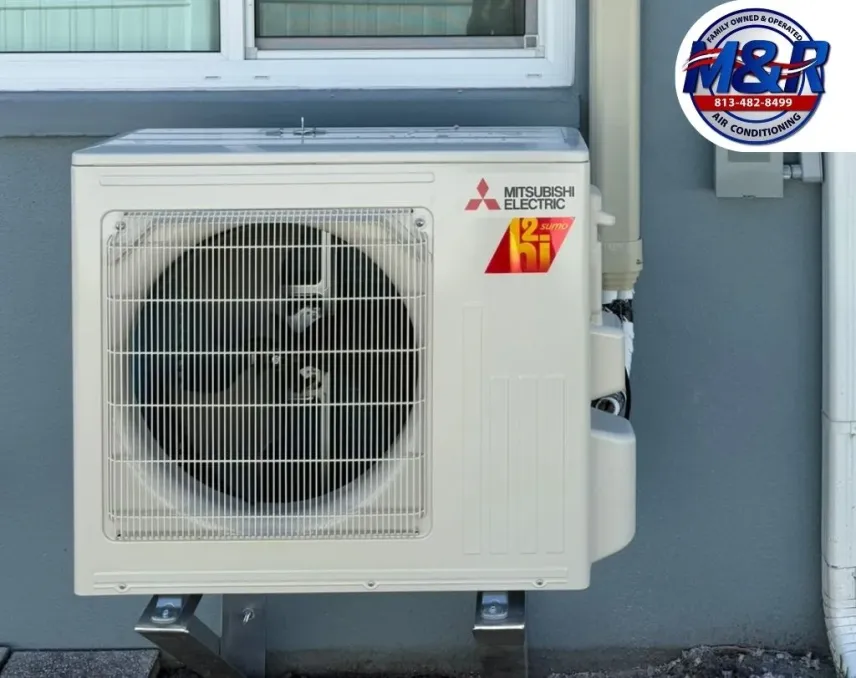
Mini-split installation costs run roughly $2,000 to $15,000 installed, based on published national averages for 2026. A single-zone system for one room lands between $2,000 and $5,500. A two-zone setup runs $4,000 to $9,000, three zones $6,500 to $11,000, and a whole-home four- or five-zone system $10,000 to $15,000.
Those are national figures. Local pricing moves with labor rates, permit requirements, and the condition of your house, so treat them as a starting point for the conversation and not as a quote.
Two things changed those numbers this year, and both catch homeowners off guard.
The federal tax credit that covered up to $2,000 on a qualifying heat pump ended on December 31, 2025. And the refrigerant rules changed, which pushed equipment costs up across every brand. If you are budgeting from an article written a year ago, your number is low by more than you would expect.
I’m Mitch Orta, and my sons and I run M&R Air Conditioning here in St. Petersburg. We install mini-splits across Pinellas and Hillsborough counties, and this is the honest version of what they cost, why quotes vary so much, and what your money is actually buying.
Two Things That Changed the Price in 2026
If you are budgeting based on quotes or guidance from 2024 or 2025, two major industry changes have driven up overall project costs for 2026.
The Federal Tax Credit Ended
For three years, a qualifying heat pump mini-split earned homeowners a federal tax credit worth 30% of the project, capped at $2,000, under Section 25C.
That credit ended. The One Big Beautiful Bill Act, Public Law 119-21, signed July 4, 2025, terminated it for any system placed in service after December 31, 2025. The IRS home energy tax credits page carries the current guidance, including its FAQs on the changes made by that law.

Two details worth knowing:
It depends on when the system was turned on, not when you bought it. A unit ordered in November 2025 and installed in January 2026 does not qualify.
A lot of published guidance still has the old dates. The original law ran the credit through 2032, and plenty of articles, calculators, and contractor materials still say so. If a quote or a website promises you a $2,000 federal credit on a 2026 install, that information is out of date.
State and utility rebates are a different matter and some remain active. The DSIRE database tracks current programs by zip code, and it is worth five minutes before you commit.
The Refrigerant Changed
Systems sold today use R-32 or R-454B in place of the older R-410A, following the EPA’s refrigerant phase-down. The new equipment costs roughly 10% to 15% more than the units it replaced.
This is already baked into current pricing, so you are not going to be surprised by it as a line item. It does mean that a price you were quoted eighteen months ago is no longer the price.

Mini-Split Installation Cost by Zone Count
Zone count moves your number more than anything else. One outdoor unit can run anywhere from one to eight indoor heads.
| Configuration | Typical Capacity | Installed Cost (national) | Common Use |
|---|---|---|---|
| Single zone | 9,000 to 12,000 BTU | $2,000 to $4,500 | Bonus room, home office, garage conversion |
| Single zone, larger | 18,000 to 24,000 BTU | $3,000 to $5,500 | Open living area, workshop |
| Two zone | 18,000 to 24,000 BTU | $4,000 to $9,000 | Primary suite plus guest room |
| Three zone | 24,000 to 36,000 BTU | $6,500 to $11,000 | Living area plus two bedrooms |
| Four to five zone | 36,000 to 48,000 BTU | $10,000 to $15,000 | Whole-home ductless |
A quick sizing note: 12,000 BTU equals one ton of cooling. Matching capacity to the actual room, including ceiling height and how much afternoon sun it takes, matters more than buying big. An oversized unit short-cycles, which means it cools fast, shuts off, and never runs long enough to pull humidity out of the air. In Florida, that is the difference between cool and comfortable.
Where the Money Goes
Published cost breakdowns for a straightforward single-zone job divide roughly like this:
- Equipment, around half the total. Outdoor condenser, indoor head, mounting hardware, and controls.
- Labor, roughly a third. Mounting, running and connecting the line set, pressure testing, and starting the system up properly.
- Electrical, 8% to 12%. A dedicated circuit and a safety disconnect at the outdoor unit.
- Permits and inspection, 2% to 5%. Required across Pinellas and Hillsborough municipalities.
Labor is the line homeowners underestimate most, and on multi-zone jobs it climbs. A single-zone install is usually a four to six hour job. Three or four zones is a full day, sometimes two.
What Moves Your Number Within a Range
Beyond system size, five key installation factors determine where your total cost falls within a quoted price range.
Efficiency rating. Higher SEER2 equipment costs 15% to 40% more upfront. In Pinellas County you are cooling nine or ten months a year, so that premium pays back faster here than it would in Georgia or the Carolinas.
Line set length. Most installs include 15 to 25 feet of line between the outdoor unit and the indoor head. Going past 30 or 50 feet adds copper, protective cladding, and extra refrigerant, usually $300 to $1,000.
Indoor unit style. Wall-mounted heads are the standard and most affordable option. Ceiling cassettes and concealed ducted units cost more for the equipment and considerably more for the labor because they need framing, drywall work, and often a condensate pump.
Your electrical panel. Nationally, adding a circuit runs $300 to $900 where the panel has room. A full panel means a service upgrade, commonly $1,000 to $2,500. This is the single biggest surprise in most quotes, and it has nothing to do with the mini-split itself.
Cooling-only or heat pump. Cooling-only units skip the reversing valve and cost 15% to 25% less. Heat pumps handle the handful of cold nights we get each winter without electric strip heat. Most of our customers choose the heat pump, and the cooling-only option is a legitimate way to save if the room genuinely never needs heat.
Why Two Quotes for the Same Job Differ by Thousands
This is the part homeowners find hardest to make sense of, and it is worth explaining plainly.
Customers have told us in reviews that our quote came in around half of what they were quoted elsewhere for the same work. A gap that size sounds implausible until you see what sits behind it, and it usually comes down to four things.
Scope that is not written the same way. One quote includes the permit, the electrical, and the line-set extension. Another leaves them off and adds them later. Compare itemized quotes, not bottom-line numbers.
Equipment tier. Premium brands run 20% to 30% above mid-tier for equipment that performs similarly in a Florida cooling load. Sometimes that premium buys a longer warranty worth having, and sometimes it buys a badge.
Overhead. A large franchise carries call centers, regional advertising, and commissioned salespeople. That shows up in the price. We are a family business, so when we quote a job, you are talking to the person who will be on your roof.
Upselling. Some quotes include equipment you did not ask about and do not need. Our customers mention this in reviews more than anything else: we tell you whether you need a repair or a replacement, and we do not pad the ticket.
Get three quotes. We are comfortable being one of them, and we would rather you compare than wonder.
What Florida Adds to a Mini-Split Install
Installing a mini-split in Pinellas County introduces four climate- and code-specific factors that impact long-term reliability, compliance, and cost.
Salt air. If you are in Redington Shores, Tierra Verde, Gulfport, or anywhere near the water, the outdoor unit needs anti-corrosion coil treatment. Skipping it takes years off the condenser.
Hurricane wind-load strapping. Local building departments inspect for it, and it is part of why the permit exists. Every one of our installs is permitted and inspected.
Humidity. Inverter-driven mini-splits run continuously at variable speed, which pulls moisture out of the air all day. That is why they feel better in a Florida summer than an equivalent window unit, and it is part of what makes them good for indoor air quality in a humid climate.
A near year-round cooling load. Systems here run harder and longer than almost anywhere in the country. Filter rinsing every month and 24 inches of clear space around the outdoor unit make a real difference in how long the equipment lasts.
Paying for It
Free estimates on replacements. We will look at the space, tell you what it needs, and put a written number in your hand with no obligation.
18 months interest free through Synchrony Bank, which turns a whole-home multi-zone project into a monthly number most households can plan around.
M&R Air Conditioning is licensed and insured across Florida DBPR, Pinellas, Hillsborough, and Pasco counties, under license numbers CAC1813759 and CAC1819067.
Frequently Asked Questions
How Much Does a One-Room Mini-Split Cost Installed?
National averages put it between $2,000 and $5,500, depending on capacity, efficiency rating, and whether your electrical panel has room for another circuit. A 12,000 BTU unit in a bonus room with an accessible panel sits at the lower end. Your own number comes from a site visit, and ours is free.
Is There Still a Tax Credit for Mini-Splits in 2026?
Not a federal one. Section 25C ended for systems placed in service after December 31, 2025. State and utility rebates may still apply, and the DSIRE database lists what is active in your zip code.
Is a Mini-Split Cheaper Than Central Air?
It depends on your ductwork. Replacing a central system where the ducts are sound is often cheaper. Adding ductwork to a house that has none, or to a room addition, is invasive and expensive, and that is where ductless usually wins. Ducted systems also lose cooling to leaks in a hot attic, which a mini-split avoids entirely.
How Long Does the Installation Take?
A single zone is typically four to six hours. Multi-zone systems take a full day or two. We have completed full installs in about six hours, and we do not leave a job half finished overnight.
How Long Will a Mini-Split Last in Florida?
Ten to fifteen years and often longer, provided the filters get rinsed monthly and the outdoor coil is protected against salt air. Florida’s runtime is hard on equipment, and maintenance is what separates a ten-year system from a fifteen-year one.
Get a Real Number for Your Home
Every figure on this page is a national range, because your house is the thing that decides where you land in it. Zone count, panel capacity, line-set run, and how close you are to the water all move the number, and none of them can be priced from a web page.
M&R Air Conditioning has been keeping Pinellas County homes comfortable as a family-run business, and your comfort is our mission. You can read what neighbors have said in our reviews, or check our frequently asked questions first.
Contact us for a free estimate and we will give you a written number, explain what is in it, and let you compare it against anyone else you are talking to.

Latest Articles

AC Unit Maintenance Cost in Pinellas County: What You Pay and What It Covers
Thermostat Set to Cool But AC Not Turning On? Here’s How to Fix It