
Commercial HVAC Maintenance Pricing for Pinellas County Businesses in 2026
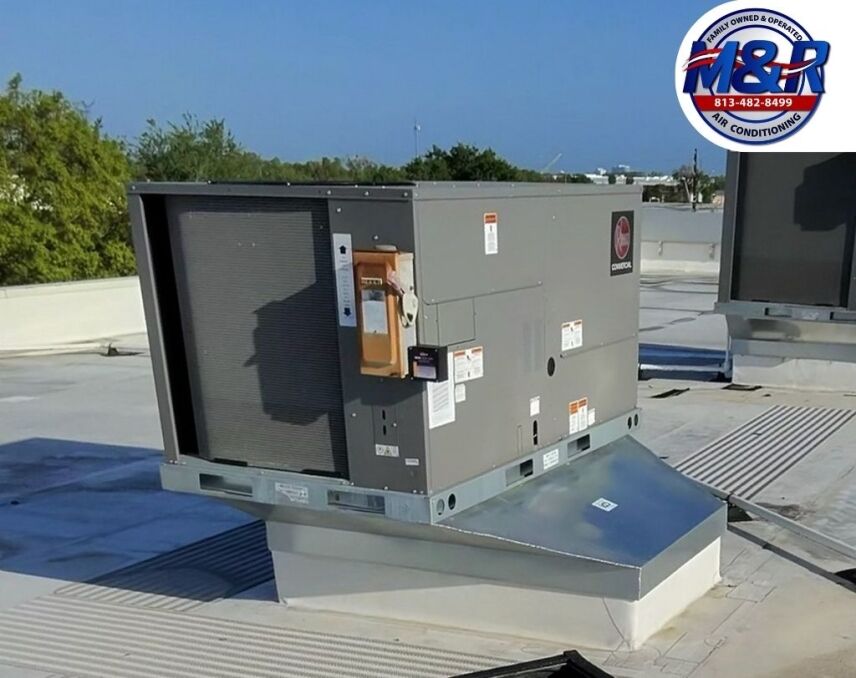
Commercial HVAC maintenance pricing for Pinellas County buildings typically averages $0.14 to $0.22 per square foot per year. A 12,000-square-foot office lands around $1,700 to $2,600 annually, while a 100,000-square-foot building runs $14,000 to $22,000. Your number moves inside that range based on equipment tonnage, system age, rooftop access, and how much parts risk you hand to your contractor.
Here’s what each factor does to your quote, what a maintenance visit should actually include, and how to read two competing proposals side by side.
| Building type | Typical size | Annual maintenance | Cost per sq ft |
|---|---|---|---|
| Small commercial (1–2 units) | Under 5,000 sq ft | $500 – $1,200 | $0.15 – $0.30 |
| Mid-size office (multiple units) | 8,000 – 20,000 sq ft | $1,400 – $4,400 | $0.18 – $0.22 |
| Office building | 50,000 – 150,000 sq ft | $7,000 – $33,000 | $0.14 – $0.22 |
| Retail/big box | 80,000 – 200,000 sq ft | $12,800 – $56,000 | $0.16 – $0.28 |
| Healthcare facility | 60,000 – 200,000 sq ft | $16,800 – $96,000 | $0.28 – $0.48 |
Smaller buildings pay a higher effective rate because a two-visit minimum sets the floor regardless of square footage. Healthcare runs highest because of air quality requirements, redundancy, and documentation.
These figures assume a standard commercial HVAC maintenance agreement with scheduled visits and labor included. Labor-only agreements run below this range. Full-coverage agreements that include parts run above it. Both are covered further down.

Five Factors That Change Your Quote
Contractors build commercial HVAC maintenance pricing from your equipment list and your building, not from a rate card. Five variables account for most of the spread between two quotes on similar square footage.

Equipment Tonnage and Complexity
A 5-ton light commercial split system takes one technician about an hour. A 100-ton water-cooled chiller, or a Variable Air Volume system with controls integration, takes a team most of a day and calls for a different skill set.
System Age and Condition
Equipment over 15 years old needs more parts, more labor hours per visit, and more frequent visits than a unit under 10 years old. Units still running R-22 add another cost layer. Production ended in the US in 2020, so any top-off comes from reclaimed supply at several times the price of R-410A. Efficiency requirements have moved as well, and the SEER2 standards now shape what a replacement unit will cost when the old one retires.
Coastal Location
Salt air and year-round humidity corrode coils, cabinets, and electrical contacts faster than inland conditions do. Buildings within a few miles of the water across our Pinellas and Hillsborough service area typically need quarterly coil rinses where an inland building gets by on two visits a year.
Rooftop Access
A unit reachable by a fixed ladder and a roof hatch costs less to service than one needing a scissor lift, a harness setup, or a crane. Access is priced into every visit for the life of the contract, so it compounds.
Service Frequency and Scope
Quarterly filter changes cost less than an agreement covering bi-annual coil cleanings, electrical testing, refrigerant checks, and controls calibration.
What a Commercial Maintenance Visit Includes
Two quotes at the same price can buy very different work. A standard preventive maintenance visit on a commercial rooftop unit covers:
- Filter replacement and airflow verification, matched to the right MERV rating for your building
- Condenser and evaporator coil inspection, with cleaning as needed
- Refrigerant pressure and superheat readings
- Electrical connection tightening, plus amp draw testing on compressors and fan motors
- Contactor, capacitor, and relay inspection
- Belt tension and pulley alignment on belt-driven units
- Condensate drain clearing and pan treatment
- Thermostat and controls calibration
- Economizer damper operation check
- Cabinet and coil corrosion inspection on coastal buildings
- Written findings with photos
- A quote priced well under the ranges above is usually a filter swap and a visual walk-through. Ask for the per-visit task list in writing before you sign anything.
Distribution sits outside most maintenance agreements. Leaking or undersized duct runs waste conditioned air no matter how well the equipment is tuned, so ask whether duct sealing and repair is quoted separately.
How to Compare Two Maintenance Proposals
Ask both contractors for the same five things:
- The per-visit task list and the number of visits per year
- Which parts are covered, and the markup on parts that are not
- Travel and trip charges, including whether they apply to warranty callbacks
- Guaranteed emergency response time, and the after-hours labor rate
- Whether pricing is locked for the contract term or subject to annual escalation
Two proposals that look $400 apart often separate by thousands once parts markup and after-hours rates land.
When Maintenance Stops Making Sense
Commercial HVAC equipment reaches the end of its economic life somewhere between 15 and 20 years. The decision point arrives when a single repair approaches a meaningful share of replacement cost, or when repairs start clustering across a season.
Replacing a 25-ton rooftop unit runs $40,000 to $67,000 installed. A maintenance agreement on that same unit runs roughly $1,200 to $2,500 a year. Five extra years of service life covers two decades of maintenance, which is why a facility with aging equipment and no service agreement usually pays twice.
Full equipment and installation budgets are broken out on our commercial HVAC installation page, and our 18-month interest-free financing spreads a replacement across your cash flow.

What Deferred Maintenance Costs
Dirty coils force the compressor to work against higher head pressure, which shows up on your electric bill months before it shows up as a failure. A thermostat reading two degrees off runs the system longer than the space needs. The case for scheduled service rests on catching both while they are still adjustments.
The Department of Energy’s Federal Energy Management Program puts numbers on the gap. Facilities running preventive maintenance spend 12 to 18 percent less on maintenance than facilities that wait for equipment to fail, and O&M programs aimed at efficiency trim energy bills 5 to 20 percent with no capital outlay.
Emergency service costs more than planned service for the same failure. Overtime labor, expedited parts, and a lift mobilized on short notice all cost differently than the same work scheduled three weeks out. If a unit is down right now, our HVAC repair team handles commercial calls across Pinellas County.
ASHRAE puts the median service life of a commercial rooftop unit at 15 years, and packaged units at 15 to 20 years. Which side of that median your equipment lands on comes down to run time, install quality, and maintenance cadence. On coastal Pinellas County buildings, corrosion pulls the same unit toward the low end.
Get Custom Commercial HVAC Maintenance Pricing for Your Facility!
We have served business owners across Pinellas County and Tampa Bay for years, from St. Petersburg and Largo through Seminole and Tampa. We are family-owned. Our technicians document what they find on every visit, send you the photos, and quote only the work the equipment needs.
Our team services, installs, and maintains light and heavy commercial systems. We build maintenance programs around your equipment, your building layout, and your budget. Seasonal pricing on service agreements shows up on our current specials page.
Schedule a commercial HVAC consultation to get a written commercial maintenance proposal for your building.

Latest Articles

Ductless Mini Split: Boost Florida Home Air Quality
Ductwork Replacement in Florida: Signs, Costs & What to Expect