


AC Leaking Water? How We Clear a Clogged Florida Drain Line
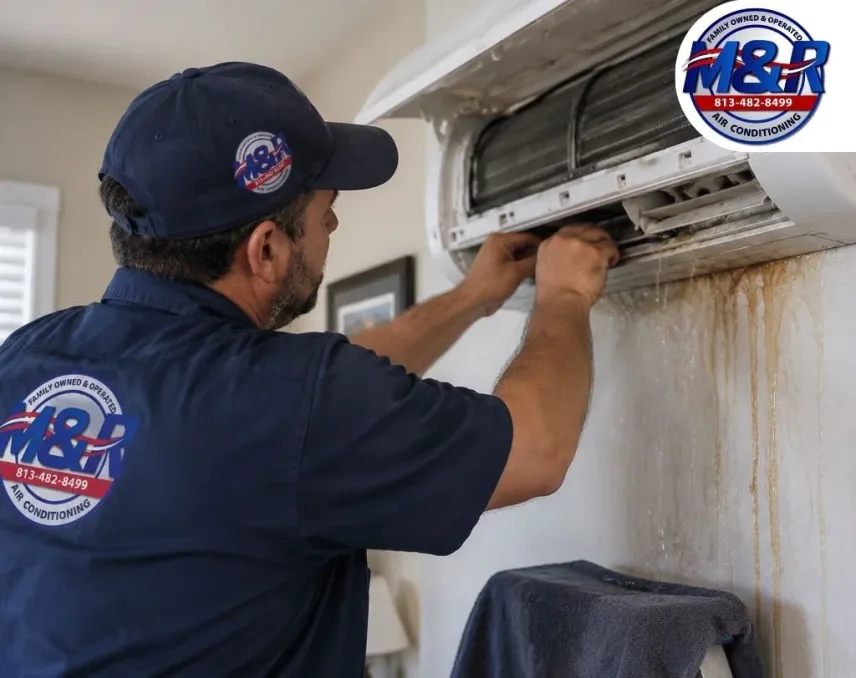
Water pooling on the floor or a fresh stain spreading across your ceiling means your AC condensate system has stopped draining. Turn your thermostat to Off immediately, because when a leaking system is left running, it continues generating water and accelerates drywall damage. From there, the issue usually stems from one of four primary causes, depending heavily on your home’s age and proximity to saltwater.
I’m Mitch Orta of M&R Air Conditioning. My sons and I handle service calls personally across St. Petersburg and Pinellas County. Here’s what we typically find when we open up an air handler in local attics.
Turn It Off First
Set the thermostat to Off.
A running system generates more condensation. If the coil is frozen, running the unit freezes it further, increasing the eventual thaw volume and the drywall bill.
If standing water reaches electrical wiring, the disconnect switch, or the air handler cabinet itself, turn off the breaker, provided you can safely access the electrical panel without standing in water or touching damp equipment. Otherwise, leave the controls untouched and contact a professional immediately.
What Is Usually Wrong
Four common issues cause nearly every indoor leak we inspect. Each leaves distinct warning signs and requires a specific repair:
- A clogged drain line. This is the most common cause by a wide margin. Algae, mold, and sludge build up inside the PVC pipe, backing up water into the drain pan. You’ll typically see standing water in the pan while little or no water exits the outdoor drain line while the system runs.
- A rusted or cracked drain pan. Water drips directly beneath the air handler even while the main drain line flows freely. Metal pans rust from the bottom up, so a pan can appear sound from above while actively leaking underneath.

- A frozen evaporator coil. Restricted airflow or low refrigerant creates ice on the copper lines, resulting in weak airflow and warm air from vents. The leak occurs later, when melting ice overwhelms the drain pan’s capacity. If you spot ice, turn the system off and allow it to thaw completely ahead of any inspection. Our guide to air conditioning system troubleshooting covers the other symptoms that point this direction.
- A disconnected or improperly sloped drain line. This issue frequently appears after attic work or servicing by another contractor. Water leaks out before reaching the exterior outlet, dripping directly through your ceiling in attic installations.
Note: A dry exterior drain outlet alone doesn’t confirm a clog, since condensation volume varies with humidity and runtime. Always inspect the drain pan as well.
What We Find in Pinellas County Homes
Three localized patterns frequently cause leaks in our area, each rooted in local housing stock and coastal environmental factors. Two of these require structural fixes to prevent recurring leaks, while the third dictates how routine maintenance can be performed.
Salt Air Corrodes Drain Pans
Homes near coastal waters experience accelerated pan corrosion. Areas like Gulfport, Pass-a-Grille, Shore Acres, and Snell Isle carry higher salt content in the air.
We routinely replace rusted pans in coastal homes at ages where an inland unit in Pinellas Park would still have years of service life remaining. If your coastal property features a system over ten years old, inspecting the drain pan proactively prevents sudden mid-summer failures. Scheduling a pan replacement during mild spring weather avoids an emergency breakdown in July.
Older Homes Often Lack an Access Cleanout
Many drain lines in established St. Petersburg neighborhoods were installed without an accessible cleanout fitting, meaning no T-pipe junction, cap, or entry point for cleaning solutions.

You can’t flush a drain line that has no opening. For these systems, the solution is either installing a cleanout port during a service call or clearing the blockage from the outdoor outlet.
Long Drain Line Runs with Excessive Turns
Home additions and historical remodels often relocate air handlers, resulting in drain lines that make three or four 90-degree turns to reach the exterior wall, sometimes running flat or slightly uphill.
Every turn creates a collection point where sludge accumulates. A line with excessive turns will clog on a predictable cycle regardless of routine maintenance. Rerouting the line provides a permanent solution. Clearing it annually offers only temporary relief.
Should You Pour Vinegar Down the Line?
Check your manufacturer’s guidelines before pouring anything down your condensate drain.
Vinegar effectively kills algae and remains a popular recommendation, but certain manufacturers warn against using vinegar or bleach because prolonged exposure degrades specific pan materials and metal coils. Bleach is particularly corrosive to metallic components.
Check your system manual or consult your technician regarding approved maintenance methods. For clients on our preventative maintenance plans, we track these specifications directly.
Safety warning: Never mix cleaning products in a drain line. Combining vinegar and bleach produces toxic chlorine gas.
What You Can Safely Try Yourself
If water is pooling on the floor near the air handler, no ice is present, electrical components remain completely dry, and you can safely reach the exterior drain outlet from ground level, a wet/dry vacuum can clear simple blockages.
- Locate the exterior PVC drain outlet near your foundation or outdoor condensing unit.
- Form a tight seal between your wet/dry vacuum hose and the PVC pipe using a rag.
- Run the vacuum for one to two minutes, then inspect the canister for trapped sludge and water.
If the obstruction doesn’t clear on the first attempt, stop there. Avoid using compressed air, plumbing snakes, or pressurized tools, as these can separate PVC joints inside walls or push debris deeper into the line.
Don’t restart the system straight after vacuuming out debris. Verify the drain pan is empty and draining properly before turning the power back on.
When to Call a Professional Immediately
Stop troubleshooting and contact a a licensed HVAC contractor if you notice any of the following:
- Water actively dripping through a ceiling, light fixture, or supply vent
- Moisture present near electrical wiring, circuit breakers, or the air handler cabinet
- Visible ice on the copper lines or evaporator coil
- The drain pan refilling immediately after being cleared
- Recurring clogs within a few weeks of clearing
- Visible rust, cracks, or structural damage on the drain pan
- Leaks developing immediately after recent attic or HVAC work
- Water continuing to accumulate while the system remains completely off, indicating a potential plumbing leak
Important: Dry wet building materials promptly. The EPA mold and water damage guidelines advises drying water-damaged areas within 24 to 48 hours to prevent mold growth, so damp drywall, insulation, or carpeting creates a mold problem on top of the initial water damage. That same guidance recommends keeping air conditioning drip pans clean and drain lines flowing properly.

Preventing Future Condensate Leaks
Three simple routine habits prevent most condensate line failures:
- Replace air filters regularly. Inspect filters monthly during peak cooling season and replace them as soon as dirt accumulates. A clogged filter starves the system of airflow, causing the coil to freeze and eventually overflow the pan. Our guide to MERV ratings explains how to balance filtration against airflow.
- Schedule annual drain maintenance. Professional tune-ups should include a thorough inspection of the drain pan, primary line, P-trap, and float switch. Schedule this service in early spring, ahead of constant summer operation. The benefits of regular maintenance extend well past the drain line.
- Keep the outdoor drain outlet clear. Grass, soil, mulch, and landscaping block the exterior pipe opening. Inspect the outlet periodically for insect nests or debris buildup.
Frequently Asked Questions
Is Water Dripping Outside the House Normal?
Yes. The primary PVC outlet on your exterior wall should drip steadily while the air conditioner runs. On humid Florida afternoons, a healthy system extracts several gallons of water per day, so a moist area beneath that pipe indicates proper operation.
Water exiting a secondary, higher pipe, typically located under an eave or above a window, indicates an emergency. Water flowing from the backup outlet means your primary drain line is completely blocked and requires attention.
Why Did My AC System Shut Off Automatically When the Line Clogged?
Most modern systems include a float switch installed inside or alongside the drain pan. When water rises above a safe threshold, the switch trips the control circuit and shuts the system down so the pan can’t overflow into your home.
If your AC stopped unexpectedly and there’s standing water in the pan, that switch just prevented water damage.
Can I Reset the Breaker and Keep Running the AC?
Resetting the breaker or bypassing a float switch forces the system to continue generating moisture while the drain path remains obstructed. Running the system with a full pan frequently converts a simple drain issue into an expensive ceiling or drywall restoration project.
Why Is Water Dripping from an AC Vent?
Water at a vent typically stems from a frozen coil thawing into the ductwork or a backed-up pan overflowing into the supply plenum. Poorly insulated ductwork in a hot attic can also condense on the outside.
My AC Is Still Cooling Well. Can I Delay Fixing the Leak?
Cooling and draining are independent of each other. A system with a clogged drain line keeps cooling right up until the pan overflows or the safety switch trips. Addressing standing water promptly prevents progressive structural damage.
Does an AC Water Leak Mean Low Refrigerant?
Not directly. Refrigerant is a gas, and it doesn’t pool on your floor. Low refrigerant levels do cause coil temperatures to drop, freezing ambient moisture into ice, and when that ice thaws, it can overflow the drain pan. If your system was blowing lukewarm air or showing frost in the days leading up to the leak, mention this during your service call.
Will Homeowners Insurance Cover Water Damage from an AC Leak?
Coverage depends on your specific policy terms and the underlying cause. Insurance policies typically cover sudden, accidental discharges but often exclude gradual damage caused by maintenance issues like slow drain clogs. Document the damage with photographs, retain service invoices, and file claims promptly.
How Long Does an AC Leak Repair Take?
Clearing a clogged drain line or replacing a faulty float switch typically takes under an hour. Replacing a damaged drain pan requires removing the coil on most air handlers, which generally takes a half-day. A heavily frozen coil adds time at the front, since the ice must melt completely for diagnostics to proceed.
Understanding Repair Costs
Here are the official pricing ranges for common AC leak and condensate system repairs:
- Drain cleaning ($125): The simplest and most economical repair, which is also easily preventable through routine maintenance.
- Float switch replacement ($249)
- Condensate pump replacement ($499)
- Drain pan replacement ($499): Involves higher labor costs because replacing the pan requires accessing or pulling the evaporator coil on most units.
- Refrigerant repairs ($599-$1200): Carries the widest cost range depending on the location of the leak and the required repair or component replacement.
Unaddressed water damage almost always exceeds the cost of the HVAC repair itself, as soaked drywall, insulation, and framing require separate remediation. Our AC repair cost guide covers pricing across Pinellas County, and financing is available on larger repairs.
Get Your System Inspected Today!
If your air conditioner is leaking water in St. Petersburg, Clearwater, Largo, Gulfport, or anywhere across our Pinellas County service area, contact M&R Air Conditioning. We’re family-owned, and we handle every job ourselves, so the technician who diagnoses your issue is the one who fixes it.
Schedule your AC Drain Line Repair or check our current specials.

Latest Articles

Heat Pump Not Cooling in Florida? What It Means and When to Call for Repair
AC Unit Maintenance Cost in Pinellas County: What You Pay and What It Covers